Good Parent, Bad Utilitarian?
A dialogue on parental love and the incompleteness of utilitarianism

“Now I would very much like someone to explain to me what kind of misery can there be for a free being whose heart is at peace and whose body is in good health? I ask which of the two, civil or natural life, is more likely to become insufferable to those who live it? We see about us practically no people who do not complain about their existence; many even deprive themselves of it to the extent they are able, and the combination of divine and human laws is hardly enough to stop this disorder. I ask if anyone has ever heard tell of a savage who was living in liberty ever dreaming of complaining about his life and of killing himself.”
Rousseau, Second Discourse, Part 1.
“Every man wants to be happy; but to succeed in being so, one would have to begin by knowing what happiness is. The happiness of the natural man is as simple as his life. It consists in not suffering; health, freedom, and the necessities of life constitute it.”
Rousseau, Emile, Book 3.
“The passions … take their origin from our needs, and their progress from our knowledge. For one can desire or fear things only by virtue of the ideas one can have of them, or from the simple impulse of nature; and savage man, deprived of every sort of enlightenment, feels only the passion of this latter sort. His desires do not go beyond his physical needs. The only goods he knows in the universe are nourishment, a woman and rest; the only evils he fears are pain and hunger.”
Rousseau, Second Discourse, Part 1.
“When I strip that being [man] of all the supernatural gifts he could have received and of all the artificial faculties he could have acquired only through long progress; when I consider him, in a word, as he must have left the hands of nature, I see an animal less strong than some, less agile than others, but all in all, the most advantageously organized of all. I see him satisfying his hunger under an oak tree, quenching his thirst at the first stream, finding his bed at the foot of the same tree that supplied his meal; and thus all his needs are satisfied.”
Rousseau, Second Discourse, Part 1.
“The law that is abused at the same time serves the powerful as an offensive weapon and as a shield against the weak, and the pretext of the public good is always the most dangerous scourge of the people. What is most necessary and perhaps the most difficult in the government is rigorous integrity in dispensing justice to all and especially in protecting the poor against the tyranny of the rich. The greatest evil is already done when there are poor people to defend and rich ones to keep in check. … Laws are equally powerless against the treasures of the rich and against the wretched state of the poor. The first eludes them; the second escapes them. The one breaks the webbing and the other slips through.”
Rousseau, Discourse on Political Economy, 124.
“Under bad governments … equality is only apparent and illusory. It serves merely to maintain the poor man in his misery and the rich man in his usurpation. In actuality, laws are always useful to those who have possessions and harmful to those who have nothing. Whence it follows that the social state is advantageous to men only insofar as they all have something and none of them has too much.”
Rousseau, Social Contract, Book 1, Ch. 9.
“Often injustice and fraud find protectors; they never have the public on their side; it is in this that the voice of the People is the voice of God; but unfortunately that sacred voice is always weak in affairs against the outcry of power, and the complaint of oppressed innocence is uttered in murmurs despised by tyranny. Everything that is done by intrigue and seduction tends to be done for the profit of those who govern; that could not be otherwise. Ruse, prejudice, interest, fear, hope, vanity, specious appearances, an air of order and of subordination, everything favors skillful men vested with authority and versed in the art of deceiving the people.”
Rousseau, Letters Written from the Mountain, Letter 8.
“Regarding equality, we need not mean by this word that degrees of power and wealth are to be absolutely the same, but rather that … no citizen should be so rich as to be capable of buying another citizen, and none so poor that he is forced to sell himself.”
Rousseau, Social Contract, Book 2, Ch. 11.
“Since the bonds of servitude are formed merely from the mutual dependence of men and the reciprocal needs that unite them, it is impossible to enslave a man without having first put him in the position of being incapable of doing without another.”
Rousseau, Second Discourse, Part 1.
“In the state of nature there is a de facto equality that is real and indestructible, because it is impossible in that state for the difference between man and man by itself to be great enough to make one dependent on another. In the civil state there is a de jure equality that is chimerical and vain, because the means designed to maintain it themselves serve to destroy it, and because the public power, added to that of the stronger to oppress the weak, breaks the sort of equilibrium nature has placed between them. The universal spirit of the laws of every country is always to favor the strong against the weak and those who have against those who have not. This difficulty is inevitable, and it is without exception.”
Rousseau, Emile, Book 4.
“Men are not naturally kings, or lords, or courtiers, or rich men. All are born naked and poor; all are subject to the miseries of life, to sorrows, ills, needs, and pains of every kind. Finally, all men are condemned to death. This is what truly belongs to man. This is what no mortal is exempt from. Begin, therefore, by studying in human nature what is most inseparable from it, what best characterizes humanity.”
Rousseau, Emile, Book 4.
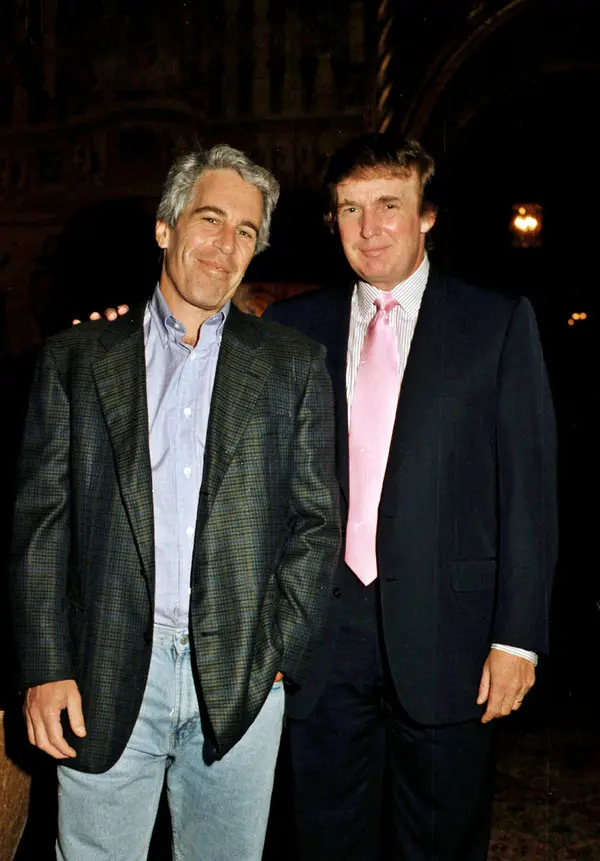
Exhibit A
“Bereft of valid reasons to justify himself and sufficient forces to defend himself, … the rich, pressed by necessity, finally conceived the most thought-out project that ever entered the human mind. It was to use in his favor the very strength of those who attacked him, to turn his adversaries into his defenders, to instill in them other maxims, and to give them other institutions which were as favorable to him as natural right was unfavorable to him. With this end in mind, after having shown his neighbors the horror of a situation which armed them all against each other and made their possessions as burdensome as their needs, and in which no one could find safety in either poverty or wealth, he easily invented specious reasons to lead them to his goal. ‘Let us unite,’ he says to them, ‘in order to protect the weak from oppression, restrain the ambitious, and assure everyone of possessing what belongs to him. Let us institute rules of justice and peace to which all will be obliged to conform …. In short, instead of turning our forces against ourselves, let us gather them into one supreme power that governs us according to wise laws, that protects and defends all the members of the association, repulses common enemies, and maintains us in an eternal concord.'”
Rousseau, Second Discourse, Part 2.
“A man could well lay hold of the fruit another has gathered, the game he has killed, the cave that served as his shelter. But how will he ever succeed in making himself be obeyed? And what can be the chains of dependence among men who possess nothing? If someone chases me from one tree, I am free to go to another; if someone torments me in one place, who will prevent me from going elsewhere? Is there a man with strength sufficiently superior to mine and who is, moreover, sufficiently depraved, sufficiently lazy and sufficiently ferocious to force me to provide for his subsistence while he remains idle? He must resolve not to take his eyes off me for a single instant, to keep me carefully tied down while he sleeps, for fear that I may escape or that I would kill him. In other words, he is obliged to expose himself voluntarily to a much greater hardship than the one he wants to avoid and gives me. After all that, were his vigilance to relax for an instant, were an unforeseen noise to make him turn his head, I take twenty steps into the forest; my chains are broken, and he never sees me again for the rest of his life.”
Rousseau, Second Discourse, Part 1.
“I conceive of two kinds of inequality in the human species: one which I call natural or physical, because it is established by nature and consists in the difference of age, health, bodily strength, and qualities of mind or soul. The other may be called moral or political inequality, because it depends on a kind of convention and is established, or at least authorized, by the consent of men. This latter type of inequality consists in the different privileges enjoyed by some at the expense of others, such as being richer, more honored, more powerful than they, or even causing themselves to be obeyed by them.”
Rousseau, Second Discourse, Part 1.
“Like the statue of Glaucus, which time, sea and storms had disfigured to such an extent that it looked less like a god than a wild beast, the human soul, altered in the midst of society by a thousand constantly recurring causes, by the acquisition of a multitude of bits of knowledge and of errors, by changes that took place in the constitution of bodies, by the constant impact of the passions, has, as it were, changed its appearance to the point of being nearly unrecognizable.”
Jean-Jacques Rousseau, Second Discourse, Preface.